




Home
|



Refund if not satisfied

Support Available

Privacy Confidentiality
© 2024 GuruCool.life. All rights reserved
Mahima | Current affairs
2024-01-10
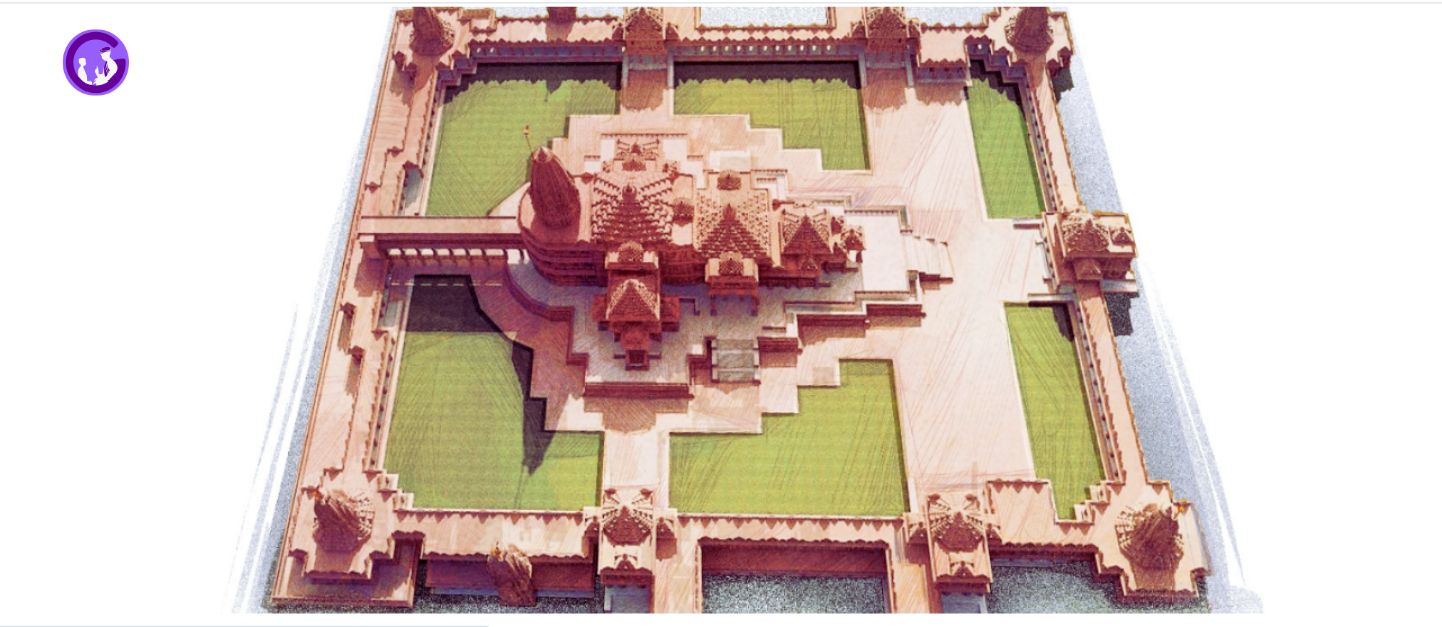
Ayodhya, the birthplace of Prabhu Shri Ram, is a holy city known for its divine energy and numerous temples. The Ram Mandir in Ayodhya is currently under construction, raising curiosity about the temple and what to expect during its construction. Lord Ram's life is guided by certain principles and ideals that hold great importance in Hindu religion, culture, and tradition. The Ram Mandir in Ayodhya is considered one of the most important temples in India due to its unique features, architectural design, and construction materials used.
As a major milestone, Construction Committee Chairman Nripendra Misra, former Principal Secretary to Prime Minister Narendra Modi, announced the completion of the construction of the Ram Mandir in Ayodhya. The Ram Mandir in Ayodhya has immense cultural, religious, and historical significance for millions of people in India. The temple is dedicated to Lord Ram and its construction has been the subject of intense debates, legal battles, and emotions for several decades. To guarantee the Ram Temple's durability, it was decided to use only durable stone and sandstone from Bansi Paharpur, indicating that the magnificent structure would last for thousands of years.
Historically, the construction of the temple began in 1528 during the reign of Emperor Babur, when his general Mirbaki built a temple on the disputed site. Hindus claim that the place is the birthplace of Lord Rama and there is an ancient temple here. The controversy led to riots and conflicts from 1853 to 1949. In 1949, an idol of Lord Rama was found in a temple, which led to further tensions between Hindus and Muslims. A legal battle ensued, and applications were filed in the Faizabad Civil Court seeking permission to worship and erect an idol. In 1984, the Vishwa Hindi Parishad sought to replace the controversial building with a temple. The matter went to court several times and the Allahabad High Court ruled in 2010 that the disputed land should be divided between the Hindu and Muslim communities. Finally, in 2019, the Supreme Court decided to build the Ram temple and allotted 2.77 acres of land to the Indian side.
ALSO READ -History of Ayodhya Shri Ram Mandir
The design of Ram Mandir traces its origins to the artistic work of the Sompura family from Ahmedabad. His contribution is notable for building more than 100 temples around the world and a legacy that spans 15 generations, especially the Somnath temple. Chandrakant Sompura, the master architect of the Ram Mandir, was assisted by his sons Nihil and Ashish Sompura, both architects.
This temple is built on a raised platform and consists of three levels. It will feature five mandapas located between the sanctum sanctorum (sanctuary) and the main entrance. The three mandapas - Kudu, Nritya and Rang - are on one side, while the Kirtan and Prarthana mandapas are opposite. This mandapa, in accordance with the style of the State, is decorated with shikhara or carvings. The highest of this range will be directly above the Garbhagriha.
The architecture of this temple is influenced not only by the style of North India but also by the style of South India and the design was done keeping in mind the guidelines of Vastu Shastra and Shilpa Shastra. Mainly the State style of architecture was implemented for the construction of the prestigious Ram Mandir. Many temples in India have been built in this style, such as the Sun Temple in Konark and the temple in Khajuraho. Along with this, some elements from the Dravidian style of architecture have also been taken and will be reflected in the four temples that will be in the corner of the main complex. General features of the State architectural style:
The temple will have 5 mandaps and one big Shikhar. The main deity of the temple will be Ram Lalla, the infant form of Lord Ram. There will also be a 14-foot-wide city with a corner dedicated to Lord Ganesha, Lord Shiva, Maa Bhagwati and Surya Dev. The church will have three stories and each will be at least 20 feet tall.
The massive support given to the Ram Temple in Ayodhya by way of financial donations is awe-inspiring. To date, the trust overseeing the construction of the temple has collected Rs.5,500 million in donations. Interestingly, this figure represents half of the Central Government's annual allocation for the school lunch initiative. Faith is clear about church funding, making sure that it is done only by public donations. A budget of 1100 million dollars is considered for the main construction of the temple. The rest of the funds are earmarked for additional facilities such as Hajj accommodation, museums and conference halls. To secure the future, the Central Government has allocated Rs.10.234 million in the 2022-23 budget, which is 60% for the school lunch program.
The main feature is that iron is not used in steel construction. Even the binding of stones is done with copper plates. This treasury was carved with Sri Ram almost thirty years ago and uses more than two million bricks collected from various places in India.
The use of modern materials such as carbon fiber and steel has been avoided. Steel is avoided because it tends to rust and is not very durable. The land is barren because the Sarayu River flows through dry land. This prevents the foundation of the temple from becoming solid. To overcome this, the sand is removed completely and the empty space is filled with a concrete mixture to create a strong and solid foundation. This concrete mix is made without the use of iron.
There are many ways to reach Ayodhya, you can choose as per your wish. Major cities like Delhi, Mumbai, and Varanasi have regular services to Ayodhya Airport, and Ayodhya Airport (AYD). Outside the airport, there are plenty of taxis and drivers waiting to take you downtown. The city has two main railway stations, Ayodhya Junction (AY) and Faizabad Junction (FD), which connect Ayodhya with major cities in India, providing efficient and convenient travel. Ayodhya also has a network of national highways, easily accessible by car or bus. Buses run frequently from Lucknow, Gorakhpur, Varanasi, and nearby cities.
Conclusion
Touted as one of the largest temples built in post-independence India, the Ayodhya Ram Temple is said to be a combination of modern technology and ancient Indian traditions The architecture is expected to follow traditional architectural principles and incorporate modern engineering techniques added to the. This project aims to be a symbol of cultural and religious integrity, emphasizing the importance of peaceful coexistence. Prime Minister Narendra Modi will attend the inauguration of the Ram Temple in Ayodhya on February 22, 2024. During the Prana Paksha (Abhishek) ceremony, an idol of Ram Lalla was installed in the holy precincts (garbhagriha) of the temple. On the other hand, from January 24, devotees will be allowed to enter the Temple.
ALSO READ -Ayodhya's Ram Mandir Grand Opening
Get Insights from Our Expert Astrologer
Get Insights from Our Expert Astrologer
आज़ादी के वीरों से संवाद: भारत माँ की सच्चाई और आज के भारत की कहानी। जानिए कैसे समय के साथ हमारे आदर्श बदल गए हैं, और क्या हम सच में स्वतंत्र हैं?

Shiva Rudra Mantra
316 Downloads

Jai Ambe Gauri
356 Downloads
Khatu Wala Shyam
341 Downloads

Gayatri Mantra Of Hanuman
354 Downloads

Jai Bhole Jai Bhole Ringtone | Mahadev Devotional Ringtone
391 Downloads

Barsane Wali Radha
381 Downloads

Shiva Nirguna Stotra
325 Downloads

Hanuman Lalla Ki Aarti
355 Downloads

Maa Durga Devotional Ringtone
358 Downloads

Kui Bhekawe
360 Downloads

Hanuman Chalisa
334 Downloads

Har Har Mahadev Ringtone | Powerful Shiv Devotional Ringtone 🔱
372 Downloads
Narayanaya Namo Namah
384 Downloads

Haare Ka Sahara
334 Downloads

Shiva Kirtan Ringtone | Powerful Shiv Devotional Ringtone
336 Downloads

-with-a-sorrowful-expression,-holding-the-Indian-flag-close-to-her-heart.-She-stands.webp)